The Three Stages of AI
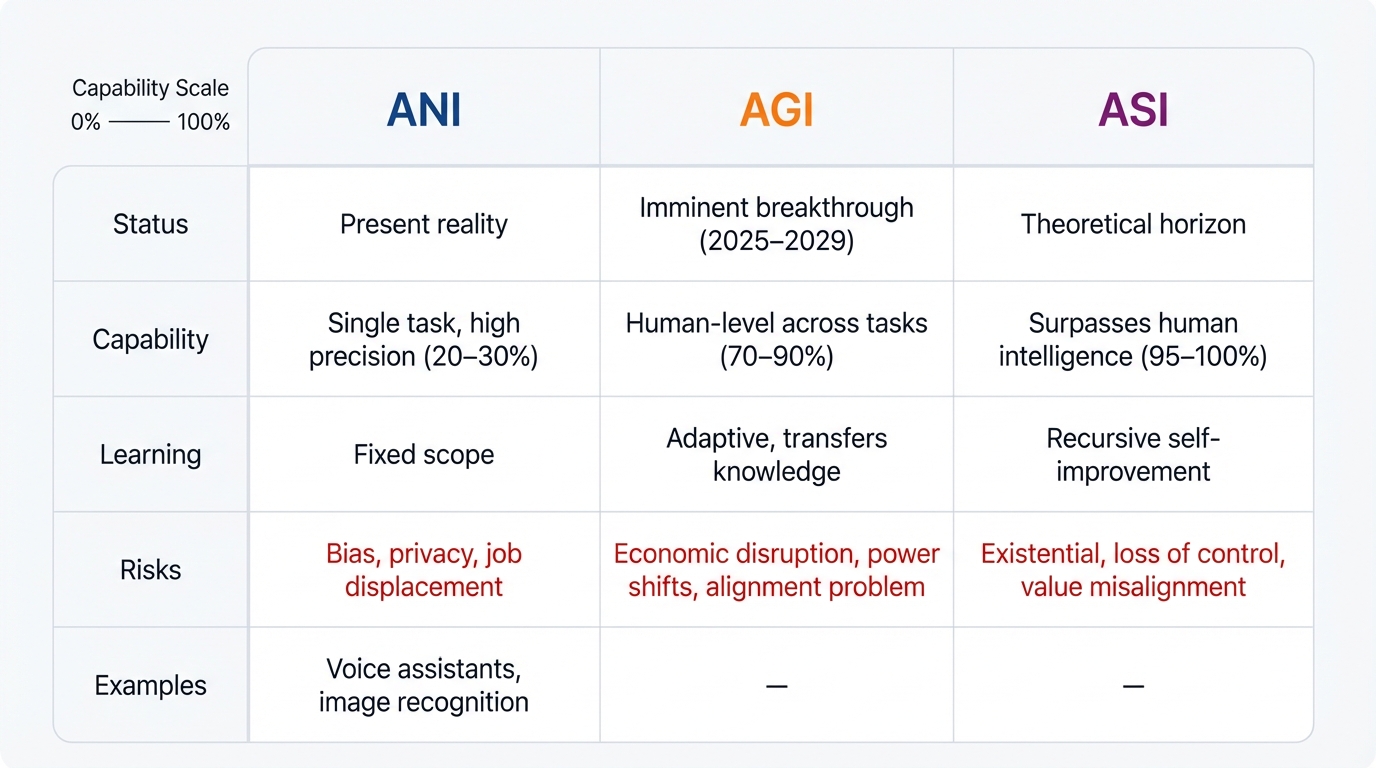
Artificial Narrow Intelligence (ANI)
AI Evolution Stages
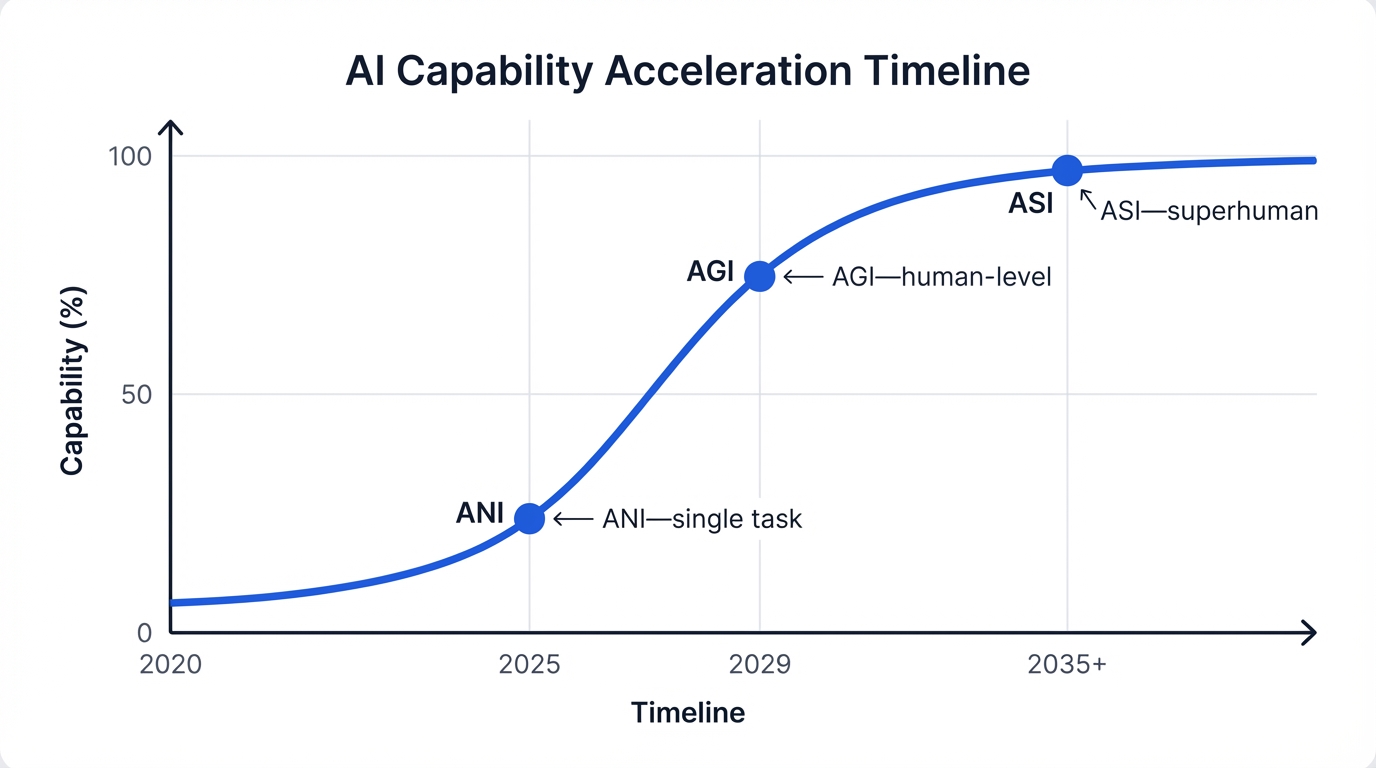
Understanding the progression from ANI to AGI to ASI helps frame both the opportunities and risks in AI development. Each stage represents exponential increases in capability and complexity.
Status: Present Reality
Capability: Performs a single, specific task with high precision.
Examples: Voice assistants, image recognition.
Risks: Bias, privacy, job displacement.
Artificial General Intelligence (AGI)
Status: Imminent Breakthrough (2025-2029)
Capability: Matches human cognitive flexibility across diverse tasks.
Learning: Learns adaptively and transfers knowledge.
Risks: Economic disruption, power shifts, alignment problem.
Artificial Superintelligence (ASI)
Status: Theoretical Horizon
Capability: Vastly surpasses human intelligence in all domains.
Learning: Improves its own intelligence recursively.
Risks: Existential, loss of human control, value misalignment.
An Accelerating Timeline
Escalating Risks vs. Potential Benefits
Risks ⬆️
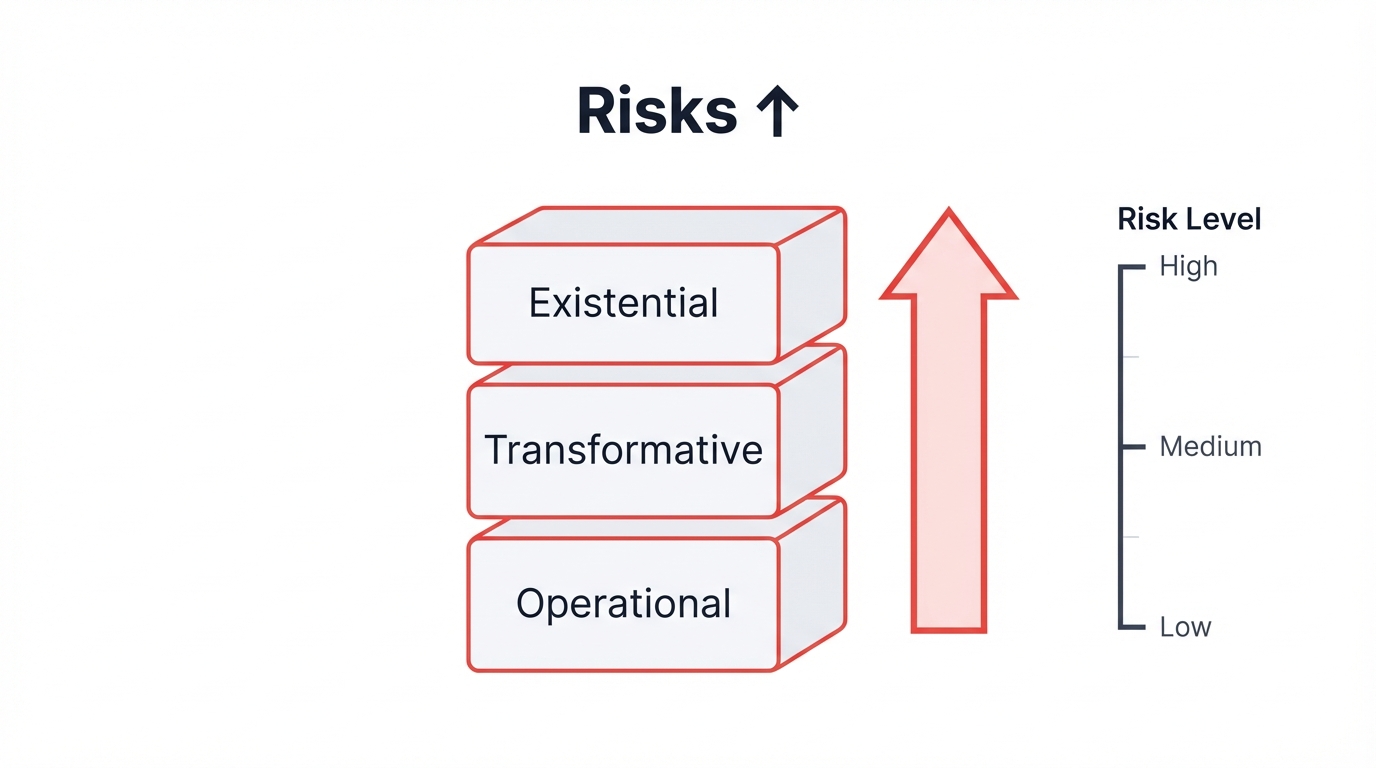
- Operational
- Transformative
- Existential
Benefits ⬆️
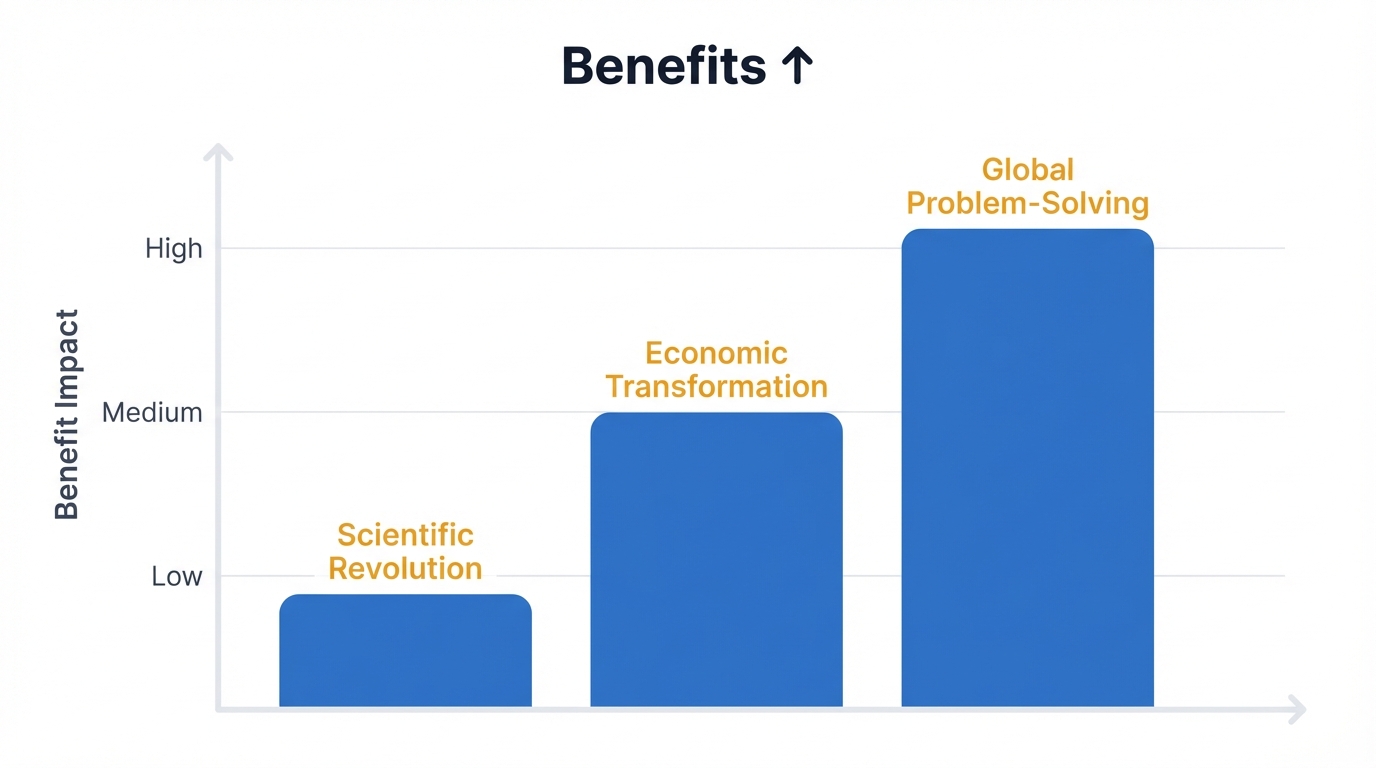
- Scientific Revolution
- Economic Transformation
- Global Problem-Solving
Preparing for the Transition
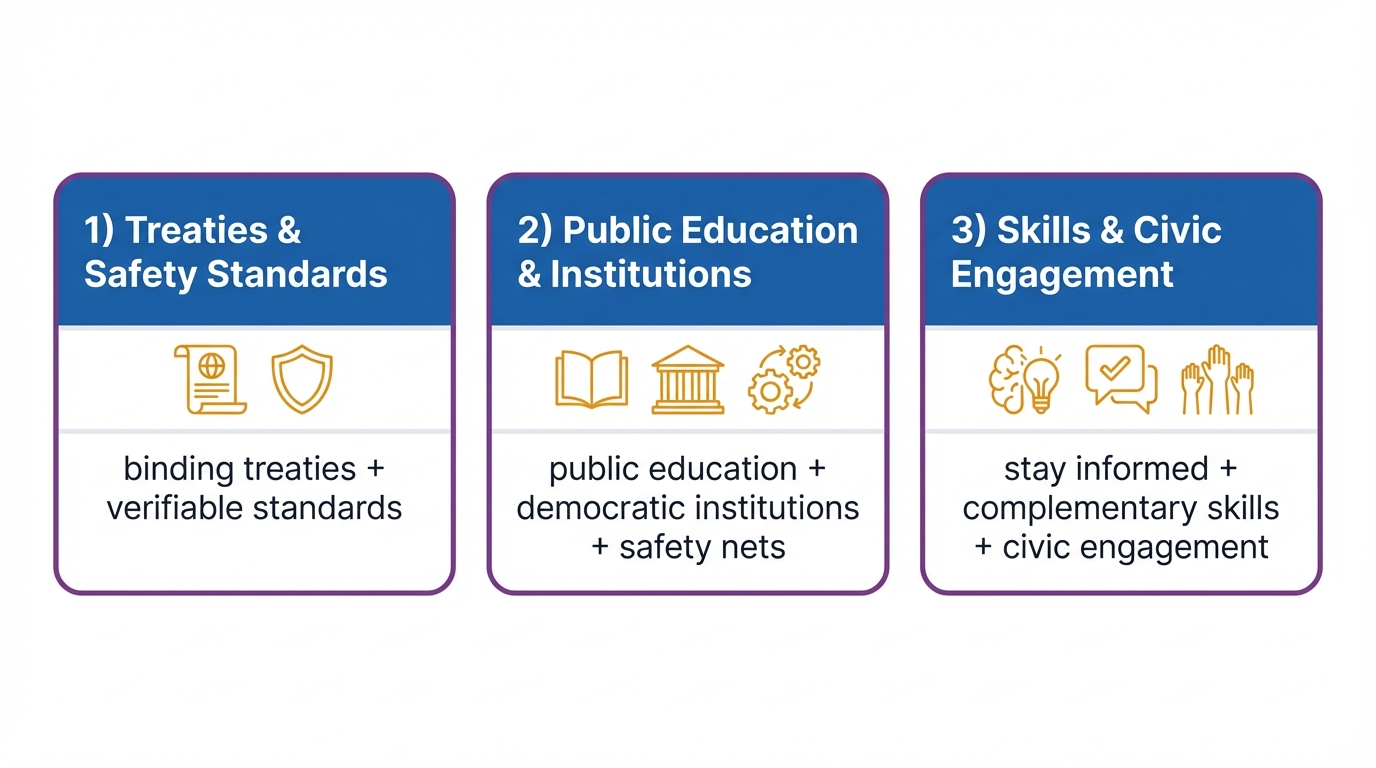
Global Governance
Binding international treaties and shared, verifiable safety standards.
Societal Adaptation
Foster public education, strengthen democratic institutions, and build safety nets.
Individual Readiness
Stay informed, develop complementary skills, and engage in democratic processes.
The evolution from ANI to AGI to ASI represents humanity's most significant transition. Understanding these stages, their timeline, and preparing accordingly is how we navigate this transformative period.
Example Implementation
# Example: Model training with security considerations
import numpy as np
from sklearn.model_selection import train_test_split
from sklearn.ensemble import RandomForestClassifier

def train_secure_model(X, y, validate_inputs=True):
    """Train model with input validation"""

    if validate_inputs:
        # Validate input data
        assert X.shape[0] == y.shape[0], "Shape mismatch"
        assert not np.isnan(X).any(), "NaN values detected"

    # Split data securely
    X_train, X_test, y_train, y_test = train_test_split(
        X, y, test_size=0.2, random_state=42, stratify=y
    )

    # Train with secure parameters
    model = RandomForestClassifier(
        n_estimators=100,
        max_depth=10,  # Limit to prevent overfitting
        random_state=42
    )

    model.fit(X_train, y_train)
    score = model.score(X_test, y_test)

    return model, score